






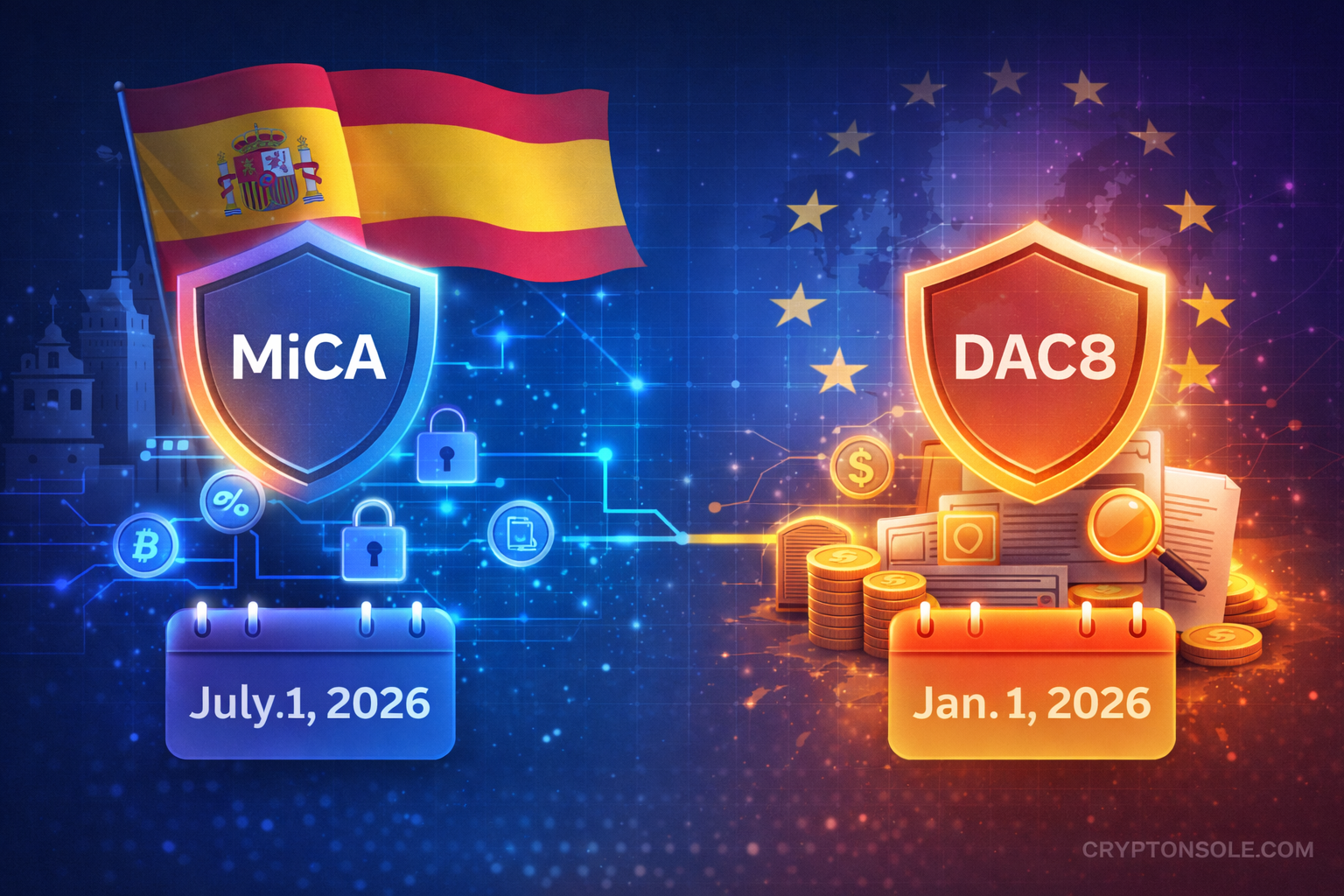
Spain has confirmed plans to fully implement two key European Union crypto regulations in 2026 that will reshape how digital assets are regulated and taxed in the country. Starting January 1, 2026, Spain will enforce the Directive on Administrative Cooperation 8 (DAC8), mandating detailed reporting of crypto transactions and user data by service providers. Meanwhile, the Markets in Crypto-Assets Regulation (MiCA) will come fully into effect on July 1, 2026, requiring all crypto-asset service providers (CASPs) to obtain formal authorization to continue operations under a harmonized EU framework.
What DAC8 Means for Crypto in Spain
The DAC8 directive expands tax transparency rules across the EU by obliging reporting crypto-asset service providers to collect and report detailed information on user transactions, balances, and fund flows to tax authorities. These requirements take effect in Spain from January 1, 2026 once the directive is transposed into national law.
Under DAC8:
- Exchanges and other regulated service providers must gather and report crypto transaction data for EU-resident users.
- Data will be transmitted to Spanish tax authorities and shared with other EU member states, bolstering automatic exchange of information to fight tax evasion and ensure compliance.
- Reporting will include detailed user identity, transaction history and holdings — helping close gaps in cross-border crypto tax enforcement.
Spanish authorities have begun adapting domestic legislation to implement DAC8, including updating general tax and administrative cooperation laws.
MiCA: Full Authorization Required by Mid-2026
MiCA (Markets in Crypto-Assets Regulation) is the EU’s landmark regulatory regime for crypto markets and service providers. Although it formally entered into force in 2024, Spain opted for an accelerated transition. During the transitional period, some CASPs operated under legacy frameworks or provisional registrations. By July 1, 2026, Spain will require all such firms to obtain full MiCA authorization from the Comisión Nacional del Mercado de Valores (CNMV) to continue offering services.
Under MiCA:
- CASPs — including exchanges, custodians, wallets and token issuers — must be authorized and supervised by the CNMV under consistent EU-level standards.
- Authorization requires extensive disclosures on governance, risk controls, AML procedures and internal systems, ensuring robust consumer protection and operational safety.
- Entities failing to secure authorization by the deadline must cease operations, potentially resulting in market exits or restructuring for non-compliant firms.
Spain’s regulatory roadmap reflects a broader trend across EU member states to centralize supervision of crypto services within established financial authorities, replacing disparate national regimes.
Why This Matters for Crypto Users and Firms
For Exchanges and Service Providers
Crypto firms operating in Spain must prepare for compliance with both MiCA authorization protocols and DAC8 reporting mandates. Firms that fail to meet authorization standards risk losing access to the Spanish market after mid-2026.
For Individual Investors and Traders
Under DAC8, crypto transactions and holdings will be reportable to tax authorities automatically — analogous to how banks and brokers report traditional financial data. This raises the importance of accurate reporting and tax compliance for investors and may reduce tax-evasion opportunities.
For the Broader Crypto Ecosystem
The combination of MiCA’s comprehensive regulatory framework and DAC8’s tax transparency regime positions Spain among the most regulated EU jurisdictions. The goal is to balance investor protection, market integrity and innovation — though critics argue it could also increase operational costs and regulatory burdens for smaller firms.
What to Watch in 2026
January 1, 2026 (DAC8 Effective):
- Crypto service providers begin mandatory reporting of user transaction data and balances.
- Spanish tax authorities receive wider data on crypto holdings and flows to enforce compliance.
July 1, 2026 (MiCA Authorization Deadline):
- CASPs must hold full MiCA licenses to operate in Spain’s market.
- CNMV supervisory actions may begin actively enforcing MiCA standards.
Bottom Line: Spain’s full implementation of DAC8 and MiCA in 2026 marks a major regulatory turning point for crypto in the country. The changes will increase tax transparency, enforce rigorous authorization standards for crypto firms, and align Spain with the EU’s broader digital asset governance framework — enhancing oversight while challenging market participants to meet elevated compliance standards.