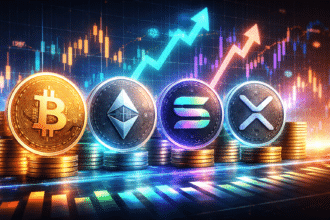






Two new leveraged exchange-traded funds (ETFs) now give traders the ability to gain 200% daily exposure to XRP and Solana — without directly owning the crypto tokens. The funds, launched by REX Shares in partnership with Tuttle Capital Management, began trading on U.S. exchanges this week.
What is being launched
- The new funds are named T-REX 2X Long SOL Daily Target ETF (ticker: SOLX) and T-REX 2X Long XRP Daily Target ETF (ticker: XRPK).
- They aim to deliver 2× daily performance of Solana and XRP — meaning if the underlying asset rises 5% in a day, the ETF seeks to return ~10% (before fees); conversely, losses are magnified similarly.
- The ETFs are structured using derivatives (swaps, options) rather than holding spot crypto directly.
- Management and fee disclosures: The funds are managed by Tuttle Capital Management, with a publicly stated annual fee of 1.5% of assets.
Why this matters
- Accessibility for retail & traditional investors: By launching as ETFs, SOLX and XRPK allow investors to gain crypto exposure through traditional brokerage accounts — bypassing the need for crypto wallets, exchanges, or self-custody. As REX’s CEO noted, this lowers the hurdle for investors who want leveraged crypto exposure within familiar financial infrastructure.
- Amplified trading — but higher risk: The 2× leverage can significantly magnify short-term gains — but also deepens losses if asset prices fall. Experts caution that leveraged ETFs are best suited for short-term tactical positions rather than long-term holding due to compounding effects.
- Expanding the crypto-ETF universe: The launches mark a continued trend of traditional financial products wrapping crypto — following earlier spot ETF launches and single-stock ETFs tied to crypto-related equities.
Market reaction and initial performance
On the day the funds debuted, both assets saw price upticks: XRP rose ~8.6% to around $2.17, while Solana surged ~12% to near $139.56. The new ETFs were cited as a contributing factor to renewed inflows.
Industry observers also noted that these ETFs give traders new tactical tools to express bullish conviction on crypto through traditional finance channels — potentially increasing trading volumes and volatility in short-term horizons.
Important caveats & risks
- Not direct crypto ownership: Because SOLX and XRPK use derivatives rather than holding the tokens themselves, investing in them does not grant actual ownership of XRP or SOL — no staking rights or token-based governance.
- Daily reset & compounding risk: Leveraged ETFs reset daily; holding over multiple days can lead to divergence from 2× the long-term return — especially in volatile markets.
- Higher fees: The 1.5% annual fee is relatively steep compared with passive ETFs or holding crypto directly. Over time, high fees plus volatility drag can erode returns.
- Suitability: These products are more suitable for experienced traders with short-term horizons and high risk tolerance — not typical long-term investors.
What to watch next
- Fund flows and volume: Whether SOLX and XRPK attract significant assets under management and trading volume — a signal of adoption beyond speculative retail demand.
- Price volatility of XRP & SOL: As leveraged ETFs magnify moves, high volatility could lead to large drawdowns — especially during broader market corrections.
- Regulatory scrutiny: Leveraged crypto ETFs may draw attention from regulators concerned about investor protection, risk disclosure and market stability.
- Expansion of the T-REX suite: REX and Tuttle may launch more leveraged crypto funds (or inverse funds) depending on investor interest and regulatory latitude.
Bottom line: The launch of 2× leveraged ETFs for Solana and XRP by REX Shares and Tuttle Capital Management marks a notable step in blending crypto with traditional finance. For traders seeking magnified exposure via brokerage accounts, the new funds offer convenience and power — but also come with amplified risk, high fees, and complexity. Investors should weigh the appeal of leveraged returns against the inherent dangers of volatility and compounding.