




Leading on-chain analytics firm Glassnode says multiple Bitcoin metrics now echo the conditions seen at the start of the 2022 bear market. Among the red flags: a rising share of supply “underwater,” increasing losses among recent buyers, weakening demand across spot, ETFs and derivatives, and deteriorating liquidity — factors that suggest the market may be entering a protracted risk phase.
Key metrics flashing warning signals
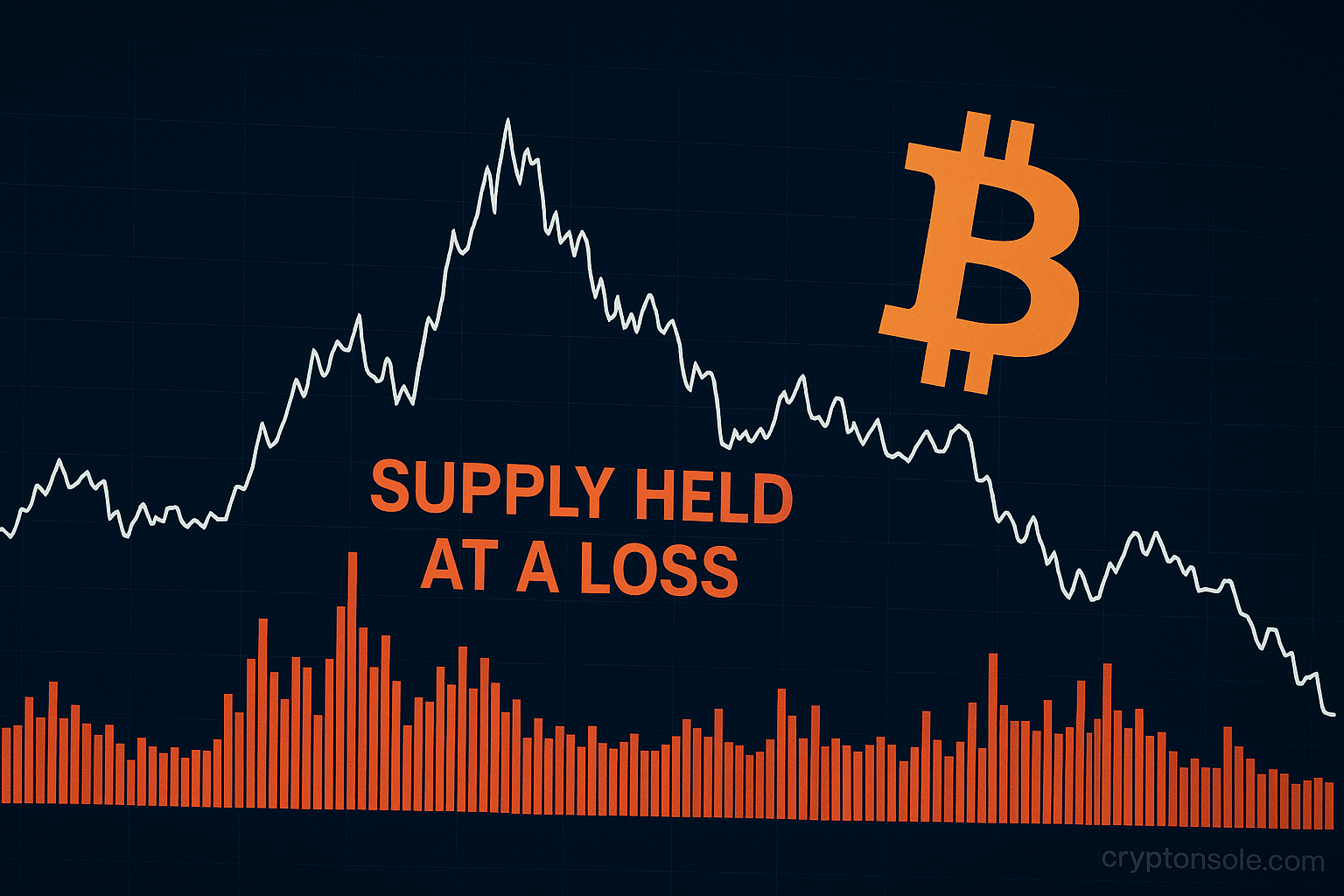
- According to Glassnode’s latest weekly report, more than 25% of all Bitcoin supply is now “underwater” — meaning coins are held at a cost basis higher than current market price.
- The 7-day moving average of supply in loss recently rose to around 7.1 million BTC, a level that rivals conditions during the early 2022 market peak.
- Glassnode notes signs of weakening demand across multiple channels: ETF inflows have slowed or reversed, spot-market demand is soft, futures open interest has fallen, and derivatives funding rates are mostly neutral — all signalling diminished risk appetite.
- The cost-basis distribution and recent realized losses among short-term holders suggest “top-buyer stress,” a phenomenon where investors who bought near recent highs are holding at a loss, increasing the risk of capitulation if negative sentiment deepens.
What “Early-2022 Conditions” Mean — And Why It Matters
Glassnode’s reference to early 2022 is significant because that period preceded a dramatic market downturn. Many of the hallmarks of that bear-market start — underwater supply, loss realisation, weak demand, thin liquidity — are presently re-emerging. According to Glassnode:
- The “True Market Mean” — a cost-basis anchor representing the realized value of all non-dormant coins — remains a key threshold. Supply concentration significantly above that level increases systemic vulnerability.
- With so much supply underwater and demand fading, the market could remain fragile unless fresh inflows reappear. Any macroeconomic shock, regulatory news, or shift in risk sentiment could trigger renewed sell-offs.
Some analysts argue the current slump may be a deep correction rather than the start of a full bear cycle — noting that long-term holders still exhibit resilience and that realized-cap inflows remain slightly positive.
Market reaction & broader implications
- Traders and institutions may become more cautious, reducing leverage or decreasing exposure until structural stability returns — especially given thinning liquidity and weak derivatives demand.
- New entrants and risk-sensitive investors may delay allocations, awaiting clearer oversold signals or macro favorable conditions.
- If conditions worsen — e.g., further drawdowns, increased selling from underwater holders, or macro stress — Bitcoin may revisit lower support zones near its realized cost basis, which some models place in the $82,000–$88,000 range.
What to watch next
- Supply-in-loss metrics — whether the underwater supply stabilizes, shrinks, or grows. Persistent growth would deepen stress.
- ETF flows, spot demand & derivatives activity — renewed inflows could restore confidence; further outflows would reinforce bearish structure.
- Macroeconomic and global liquidity conditions — central bank policy, interest rates, and global liquidity may play a decisive role in whether the market rebounds or slides.
- On-chain signals of capitulation or accumulation — look for spikes in long-term holder activity, net transfer volume, and signs of re-accumulation at lower price levels.
Bottom Line: According to Glassnode’s latest analysis, Bitcoin’s market structure has begun to resemble that of early 2022 — with elevated unrealized losses, waning demand, and thin liquidity. While that doesn’t guarantee a full-blown bear market, the current stress indicators suggest rising vulnerability. The coming weeks will be critical: held supply, macro conditions, and demand flows will likely determine whether this is a temporary correction or the start of a deeper downturn.